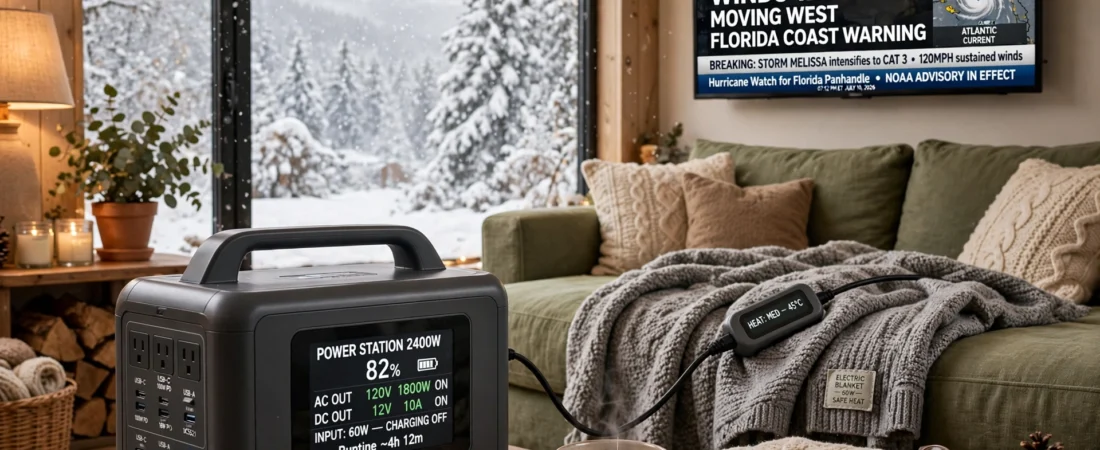
Winter storm outages present a different challenge than a summer blackout — the priority shifts from refrigeration to warmth, and cold temperatures themselves can affect how your power station performs. This guide covers what to prioritize specifically for winter storm preparedness, and our top picks for staying safe and comfortable when the power goes out in the cold.
Quick Answer: Our Top Winter Storm Picks
| Power Station | Best For | Capacity | Approx. Price |
|---|---|---|---|
| ECOFLOW DELTA 3 Classic | Best value for essential winter circuits | ~1,024Wh | $550–$600 |
| Anker SOLIX C1000 Gen 2 | Fast recharge, UPS switchover for medical equipment | ~1,024Wh | $450–$500 |
| EcoFlow DELTA 3 MAX Plus | Running an electric space heater or blanket for extended periods | ~4,096Wh (expandable) | $2,500–$3,200 |
| Jackery Explorer 2000 v2 | Reliable mid-size backup with solar pairing option | ~2,042Wh | $700–$900 |
Why Winter Storms Require Different Planning Than Summer Outages
Winter storm outages carry risks that differ meaningfully from a typical summer blackout:
- Heat, not cooling, becomes the priority. Losing heating during a winter storm is a genuine safety risk, particularly for elderly residents, young children, or anyone with health conditions — and heating appliances (space heaters, electric blankets) draw significantly more power than typical summer essentials.
- Cold temperatures affect battery performance. Lithium batteries, including LiFePO4, lose some capacity and charge more slowly in freezing temperatures. This matters if your power station is stored somewhere unheated, like a garage or shed.
- Roads and supply chains can be disrupted longer than a summer storm. Winter storms can make it harder to reach stores for supplies or professional help, making self-sufficient backup power more valuable during the outage itself.
- Pipes and plumbing are at risk. Extended heating loss during freezing temperatures raises the risk of frozen or burst pipes — sometimes a bigger financial risk than the outage itself.
What to Prioritize for Winter Storm Prep
Higher Output for Heating Appliances
Unlike summer outage priorities (refrigerator, fans, lights), winter storm backup often needs to account for space heaters (typically 1,000-1,500W) or electric blankets (much lower draw, typically 50-200W). A small space heater alone can rapidly deplete a compact power station, so realistic capacity planning matters even more for winter use. See our wattage guide for exact appliance calculations.
Battery Chemistry and Cold Weather Performance
LiFePO4 batteries generally handle cold weather better than older lithium-ion (NMC) chemistry, but all lithium batteries perform somewhat worse in freezing temperatures — charging slows down, and available capacity can be modestly reduced. If possible, store your power station somewhere above freezing (an insulated closet or interior room) rather than an unheated garage, both for battery performance and longevity.
Realistic Heating Expectations
Be honest about what a portable power station can and can’t sustain for heating. Running a full-size space heater continuously will drain even a large power station within an hour or two. Most winter storm prep realistically focuses on: a smaller, more efficient heating source (an electric blanket or small ceramic heater used intermittently), good insulation practices (closing off unused rooms, using blankets and layers), and reserving the power station’s capacity for genuinely essential circuits rather than attempting to fully heat a home.
Medical Equipment Priority
If anyone in your household relies on medical equipment (CPAP machines, oxygen concentrators, home dialysis equipment), prioritize capacity and UPS-style seamless switchover for winter storm prep specifically, since these outages can extend for multiple days in severe cases, and cold weather adds additional health risk if equipment fails unexpectedly.
Top Picks Explained
Best Value for Essential Circuits: Bluetti AC180
At around $599 with 1,024Wh capacity and 1,800W continuous output, the AC180 comfortably covers lighting, phone charging, WiFi, an electric blanket, and intermittent use of a small space heater, without the premium price of larger systems — a solid choice for most households’ realistic winter storm needs.
Best for Medical Equipment Reliability: Anker SOLIX C1000 Gen 2
For households with medical equipment needs, the C1000 Gen 2’s UPS-style switchover (helping avoid interruption to sensitive devices when grid power drops) combined with fast recharge makes it a strong choice for winter storm scenarios where reliability matters most.
Best for Sustained Heating Needs: EcoFlow DELTA Pro 3
If your household specifically needs to run a space heater for extended periods, or wants genuine multi-day coverage of heating plus other essentials, the DELTA Pro 3’s much larger capacity and expandability provide meaningfully more headroom than compact units, though at a significantly higher price point.
Best for Solar-Assisted Winter Backup: Jackery Explorer 2000 v2
For households planning to supplement their power station with solar charging even during winter (solar panels still generate some power on clear winter days, just less than summer), the Explorer 2000 v2’s mid-size capacity paired with Jackery’s mature solar ecosystem offers a reasonable balance for extended winter outages.
Realistic Winter Heating Runtime Estimates
| Heating device | Typical wattage | Approx. runtime on 1,000Wh |
|---|---|---|
| Electric blanket | 50-200W | 5-20 hours |
| Small ceramic space heater | 750-1,500W | 40 minutes–1.3 hours |
| Space heater (intermittent/cycled use) | Effectively lower average | Several hours, depending on duty cycle |
Given these numbers, most winter storm prep is more realistic when built around an electric blanket or intermittent space heater use combined with good insulation practices, rather than attempting to run a space heater continuously for an extended outage.
A Winter Storm Power Prep Checklist
- Store your power station somewhere above freezing when possible, not an unheated garage or shed
- Charge to 100% as soon as a winter storm warning is issued for your area
- Prioritize medical equipment, lighting, and communication over attempting to run a space heater continuously
- Keep blankets, warm layers, and non-electric backup heating options (safely rated) on hand as a supplement, not a replacement
- Let faucets drip slightly during extreme cold to help prevent frozen pipes, if your plumbing is at risk
- Check on elderly neighbors or family members who may also be without power
Frequently Asked Questions
Does cold weather damage my power station’s battery? Extreme cold can temporarily reduce available capacity and slow charging, but it doesn’t typically cause permanent damage to modern LiFePO4 batteries within normal winter temperature ranges. Avoid charging a battery that has dropped below freezing internally until it warms slightly, as most manufacturers recommend against charging in sub-freezing conditions specifically.
Can I run an electric blanket all night on a power station? Yes, in most cases — electric blankets draw relatively little power (50-200W depending on setting), making them one of the most efficient ways to stay warm during a winter outage without draining your battery quickly.
Is it safe to run a space heater indoors from a power station? Yes, unlike a gas generator, a power station produces no carbon monoxide, so running an electric space heater from it indoors is safe from a fumes standpoint. Just be mindful of the heater’s own safety guidelines (keeping it clear of flammable materials, not leaving it unattended) as you would with any space heater.
How do I keep my pipes from freezing during an extended winter outage? Beyond backup power for essential circuits, keeping cabinet doors open under sinks (allowing warm air circulation), letting faucets drip slightly during extreme cold, and closing off unused rooms to concentrate available heat are practical steps that don’t require significant additional power draw.
Final Verdict
For most households, the Ecoflow Delta 3 Classic offers strong value for essential winter circuits including an electric blanket and intermittent space heater use. Households with medical equipment needs should prioritize the Anker SOLIX C1000 Gen 2 for its UPS reliability, while those wanting genuine sustained heating capability should consider the higher-capacity EcoFlow DELTA Pro 3.
Want broader guidance on preparing your home for any type of outage? Check out our complete guide to preparing your home for a power outage.
Prices and specifications are approximate and subject to change. This guide is for general informational purposes — always follow official guidance from local emergency management authorities during severe winter weather.
Affiliate Disclosure: This post contains affiliate links. If you purchase through one of these links, we may earn a small commission at no extra cost to you. We only recommend products we believe genuinely deliver value to readers.