Affiliate Disclosure: This post contains affiliate links. If you purchase through one of these links, we may earn a small commission at no extra cost to you. We only recommend products we believe genuinely deliver value to readers.
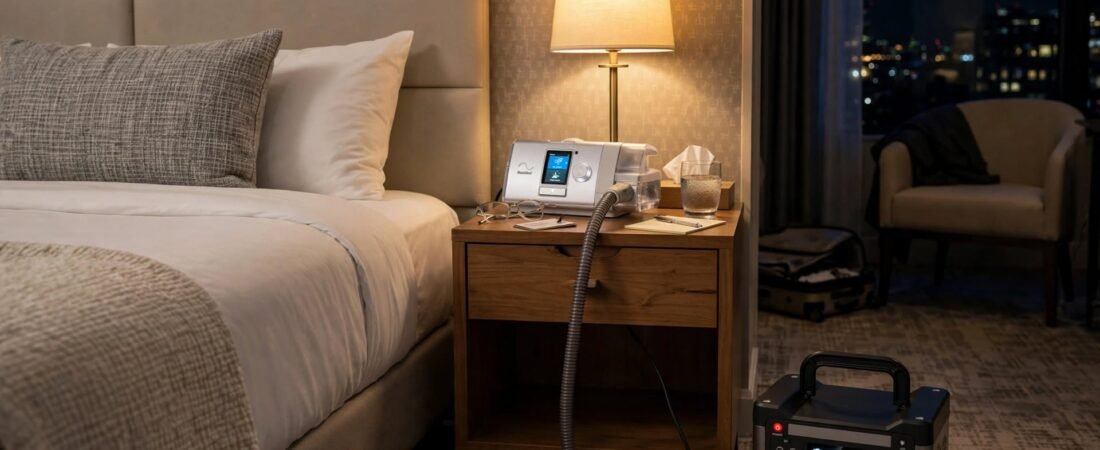
If you rely on a CPAP machine, losing power isn’t just an inconvenience — it can mean a genuinely bad night’s sleep or worse, especially while traveling, camping, or during a home power outage. The good news: CPAP machines are relatively low-power devices, meaning even a compact power station can keep you covered for multiple nights. This guide covers exactly what to look for and our top picks.
Quick Answer: Our Top CPAP Picks
| Power Station | Best For | Capacity | Approx. Nights of CPAP Use* | Approx. Price |
|---|---|---|---|---|
| Bluetti Elite 30 V2 | Budget-friendly, compact | ~288Wh | 5–7 nights (no humidifier) | $250–$280 |
| Jackery Explorer 300 | Lightest option for travel | ~292Wh | 5–7 nights (no humidifier) | $250–$300 |
| Anker SOLIX C1000 Gen 2 | Best for humidifier users | ~1,024Wh | 12–17 nights (with humidifier) | $450–$500 |
| Jackery Explorer 1000 v2 | Multi-device + CPAP combo | ~1,070Wh | 13–18 nights (with humidifier) | $700–$800 |
*Estimates based on average CPAP power draw of 30-40W without humidifier and 60-80W with a heated humidifier running; actual runtime varies by specific CPAP model and settings.
What Matters Most for CPAP Use Specifically
Pure Sine Wave Output Is Non-Negotiable
This is the single most important spec for CPAP use, and it’s easy to overlook. CPAP machines, like most sensitive medical electronics, require pure sine wave AC output to function safely and correctly. Modified sine wave inverters (found on some budget or older power stations) can cause CPAP machines to run inefficiently, produce unusual noises, or in some cases fail to function properly at all. Virtually all major brands covered in our reviews (Jackery, EcoFlow, Anker SOLIX, Bluetti) use pure sine wave inverters, but always double-check this spec before buying, especially with lesser-known budget brands.
Fan Noise Matters More Than Almost Any Other Use Case
Since a CPAP machine runs while you sleep, often with the power station in the same room, fan noise becomes a much bigger factor than it would for camping or home backup use. Look for units specifically noted in reviews for quiet operation, or units with a “silent mode” or low-power operating threshold, since most power stations only run their cooling fan audibly under heavier loads — a CPAP’s low wattage draw often keeps the unit below that noisy threshold entirely.
Humidifier Use Roughly Doubles Power Draw
This is worth planning around carefully. A CPAP machine without a heated humidifier typically draws 30-40W, while running the heated humidifier can push draw up to 60-80W or more, depending on the heat setting. If you rely on your humidifier nightly (many users do, especially in dry climates or during winter), plan your capacity around the higher figure rather than the base CPAP draw alone.
Size and Portability for Travel
If your primary use case is air travel or hotel stays during power-uncertain trips, weight and size matter far more than for home-backup-focused buyers. A compact 300Wh-class unit is usually sufficient for CPAP-only use and travels far more easily than a bulkier 1,000Wh+ unit.
Top Picks Explained
Best Budget Pick: Bluetti Elite 30 V2
At roughly 288Wh, the Elite 30 V2 comfortably covers 5-7 nights of CPAP use without a humidifier, or roughly 3-4 nights with one running. Its compact size and genuine LiFePO4 chemistry make it a strong, affordable choice for anyone whose primary need is simply CPAP backup rather than broader device charging or appliance use.
Why CPAP users choose it: Reliable, affordable, purpose-sized capacity without paying for capability you won’t use.
Best for Lightweight Travel: Jackery Explorer 300
At roughly 7.5 lbs, the Explorer 300 is genuinely easy to pack in a suitcase or carry-on for flights (check current airline battery capacity restrictions before flying, as most airlines cap carry-on battery capacity around 100Wh without special approval — always verify current limits with your airline). For hotel stays or travel where reliable outlet access is uncertain, this remains one of the most travel-friendly options in its capacity class.
Why CPAP users choose it: Genuinely lightweight, with Jackery’s well-established reliability track record.
Best for Humidifier Users: Anker SOLIX C1000 Gen 2
If you run your CPAP’s heated humidifier nightly, the larger roughly 1,024Wh capacity of the C1000 Gen 2 provides meaningfully more runway — potentially 12-17 nights depending on your exact humidifier settings — without needing to recharge as frequently. Its fast AC recharge (around 58 minutes) also means less downtime between uses if you do need to top off.
Why CPAP users choose it: Enough buffer capacity to comfortably run a humidifier nightly without constant recharging anxiety.
Best for CPAP Plus Other Devices: Jackery Explorer 1000 v2
If you want a single unit that covers your CPAP overnight while also charging phones, a laptop, or running a small fan or light, the Explorer 1000 v2’s roughly 1,070Wh capacity and Jackery’s quiet, reliable operation make it a strong all-in-one choice for travel or home backup that goes beyond CPAP alone.
Why CPAP users choose it: Enough headroom to cover CPAP plus other essentials without needing a second, separate device.
How to Calculate Your Exact Runtime
- Check your CPAP machine’s power label (usually on the power brick or in the manual) for wattage — most fall in the 30-60W range depending on model and humidifier use.
- Divide your power station’s watt-hour capacity by your CPAP’s wattage draw to get approximate hours of runtime.
- Divide that by the number of hours you typically sleep per night (commonly 7-8 hours) to get approximate nights of coverage.
Example: A 300Wh unit ÷ 35W (no humidifier) = ~8.5 hours of runtime ÷ 7.5 hours/night ≈ just over 1 night per full charge, or closer to 5-6 nights when accounting for typical inverter efficiency losses being factored into the manufacturer’s realistic runtime estimates rather than pure theoretical math.
(Note: manufacturer-published runtime estimates already account for real-world inverter efficiency, which is why the “quick answer” table above shows higher night counts than a purely theoretical calculation would suggest — always check the manufacturer’s own CPAP runtime estimates for your specific model when available.)
Frequently Asked Questions
Will a modified sine wave power station damage my CPAP? It may not damage it outright, but it can cause erratic behavior, unusual noise, or reduced performance, and isn’t recommended by most CPAP manufacturers. Always confirm pure sine wave output before using any power station with medical equipment.
Can I bring a power station on an airplane for my CPAP? Most airlines allow lithium battery power stations in carry-on luggage, but typically cap capacity at 100Wh without prior airline approval (some allow up to 160Wh with approval). Always check your specific airline’s current battery policy before flying, since rules vary and can change.
Do I need to worry about my CPAP power station during a home power outage? This is one of the most common and valuable use cases — a fully charged power station in the 300-1,000Wh range can reliably cover several nights of CPAP use during a home outage, making it worth keeping charged and ready as part of general emergency preparedness.
Should I buy extra capacity “just in case,” even if I don’t use a humidifier? A modest buffer is reasonable, but significantly over-buying capacity mainly adds weight, cost, and slower recharge time without meaningful benefit for CPAP-only use. Match your purchase to your actual humidifier habits and typical trip length rather than worst-case assumptions.
Final Verdict
For most CPAP users, a compact 300Wh-class unit like the Bluetti Elite 30 V2 or Jackery Explorer 300 comfortably covers several nights without a humidifier and remains easy to travel with. If you run a heated humidifier nightly or want a single unit that covers CPAP plus other devices, stepping up to a 1,000Wh-class unit like the Anker SOLIX C1000 Gen 2 provides meaningfully more comfortable buffer capacity.
Want to see how these picks compare across other use cases? Check out our complete guide to the best portable power stations for the full breakdown by budget and capacity.
This article is for general informational purposes and is not medical advice. Always consult your CPAP manufacturer’s documentation and your healthcare provider regarding appropriate backup power solutions for your specific medical equipment.